
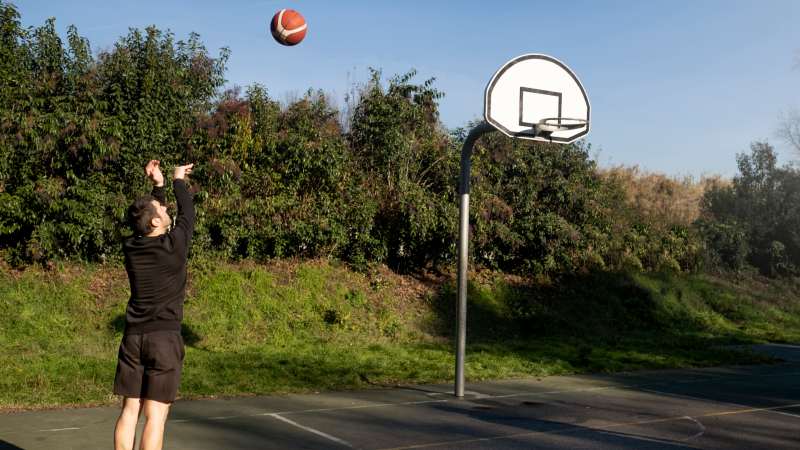
Basketball is a fast-moving sport where individual skill, teamwork, decision-making, and efficiency all contribute to performance. While scores provide a quick picture of what happened, statistics offer a much deeper way to understand the action. Points, rebounds, assists, shooting percentages, turnovers, steals, and many other measurements can reveal patterns that may not be obvious from watching a game alone.
For sports readers, sffarebasketball statistics by sportsfanfare can be a useful topic for exploring how basketball numbers are organized and interpreted. Understanding these figures does not require advanced mathematical knowledge. With a basic explanation of the most common measurements, anyone can become more comfortable reading basketball statistics.
Why Basketball Statistics Matter
Statistics turn individual moments into measurable information. A successful shot becomes a field goal made, a missed attempt becomes a field goal attempt, and a recovered missed shot becomes a rebound. Over the course of a game or season, these individual events create a detailed statistical record.
Traditional statistics remain important because they provide a straightforward description of performance. Points show scoring production, rebounds measure recovered missed shots, assists record passes that directly lead to made baskets, and turnovers indicate possessions lost by the offense. The NBA’s official glossary classifies many of these as traditional statistics while also providing definitions for more advanced measurements.
Statistics can also help readers compare performances across different games. Instead of remembering every possession, a reader can look at a player’s shooting efficiency, playmaking, rebounding, or defensive contributions and develop a clearer picture of the overall performance.
Understanding Points
Points are usually the first statistic people notice when examining a basketball box score. They represent the total number of points scored by a player or team.
However, scoring totals alone do not tell the entire story. A player who scores many points may also have taken a large number of shots. Another player might score fewer points while making a higher percentage of attempts and contributing more assists or rebounds.
This is why points should normally be examined alongside shooting attempts and percentages. Looking at several statistics together provides more context than relying on one number.
Field Goals and Shooting Percentage
Field goals include both two-point and three-point baskets. Statistics typically record field goals made and field goals attempted. Field goal percentage is calculated by dividing made field goals by attempted field goals. The official NBA glossary uses this same definition.
For example, if a player makes 8 shots from 16 attempts, the field goal percentage is 50%. This number gives readers a quick way to understand shooting accuracy.
Three-point shooting is tracked separately because successful three-point shots are worth more than two-point baskets. Three-point percentage measures the number of three-point shots made compared with three-point attempts.
A good statistical review should consider both volume and efficiency. Making many shots can be valuable, but the number of attempts and the percentage of successful attempts provide important context.
Free Throw Statistics
Free throws are another important part of basketball scoring. Players may receive free-throw opportunities after certain fouls, and these attempts are recorded separately from field goals.
Free-throw percentage measures how many free throws a player or team makes compared with the number attempted. For example, a player who makes 9 of 10 attempts has a 90% free-throw percentage.
Free throws can become particularly important in close contests because they offer scoring opportunities without a defender contesting the shot in the usual way. When examining a player’s scoring efficiency, free-throw production can therefore provide useful additional context.
Rebounds and Second-Chance Opportunities
A rebound occurs when a player recovers the ball after a missed shot. Total rebounds can be divided into offensive and defensive rebounds.
Offensive rebounds give a team another opportunity to score after a missed shot. Defensive rebounds generally end the opponent’s possession and allow the team to transition into offense.
The NBA defines total rebounds as rebounds collected on either offense or defense and also tracks more detailed rebounding measurements.
When examining rebounding statistics, it is useful to consider a player’s position, minutes played, and role. A center may naturally have more rebounding opportunities than a guard, while a player who spends fewer minutes on the court may have a lower total even when their rebounding rate is strong.
Assists and Playmaking
Assists provide insight into a player’s ability to create scoring opportunities for teammates. The NBA defines an assist as a pass that leads directly to a made basket.
A high assist total can indicate that a player is heavily involved in creating offense. However, assists should also be considered alongside turnovers, minutes, and the player’s role within the team’s offense.
For example, a primary ball-handler may naturally have more opportunities to record assists because they control the ball frequently. A player who specializes in finishing plays may have fewer assists while still making a major offensive contribution.
Turnovers and Ball Security
Turnovers occur when the offensive team or player loses possession of the ball. They can result from inaccurate passes, offensive fouls, traveling violations, steals, or other mistakes.
Turnover statistics are important because every lost possession can remove an opportunity to score. Teams that consistently protect the ball can create more offensive opportunities over the course of a game.
The NBA also provides advanced turnover measurements, including turnover percentage, which looks at turnovers in relation to offensive plays or possessions.
Looking at turnovers alongside assists can be particularly informative. A player with many assists and relatively few turnovers may be demonstrating efficient playmaking, although the exact interpretation depends on role and playing time.
Defensive Statistics
Basketball defense involves much more than one statistic. Steals and blocks are among the most recognizable defensive measurements, but they do not capture every defensive contribution.
A steal records a defensive play that results in possession changing hands, while a block records a defensive player preventing or altering a shot attempt. Rebounds can also be an important part of defensive performance because securing the ball after an opponent’s missed shot can end a possession.
Modern statistical systems track additional defensive information, including contested shots and different types of defensive rebounds. These measurements can provide greater detail about how players affect opponents even when they do not record a steal or block.
Advanced Basketball Statistics
Basketball analysis has expanded beyond traditional box-score numbers. Advanced statistics attempt to provide additional context about efficiency, possession use, shooting, and overall contribution.
True Shooting Percentage, for example, considers field goals, three-point value, and free throws rather than focusing only on conventional field-goal percentage. The NBA glossary defines TS% using points, field-goal attempts, and free-throw attempts.
Effective field-goal percentage is another useful measurement because it adjusts for the extra value of successful three-point shots. Assist percentage, rebound percentage, usage percentage, pace, and points per possession are other examples of more detailed statistical measurements.
These figures can be useful, but they should not be treated as complete descriptions of a player’s value. Different statistics answer different questions, so readers should first understand what a measurement is designed to show.
Team Statistics Versus Player Statistics
Player statistics focus on individual contributions, while team statistics provide a broader view of performance.
Team numbers can include total points, shooting percentages, rebounds, assists, turnovers, and defensive figures. Examining these statistics can help explain how a team’s overall performance developed during a contest or season.
For example, one team may have a shooting advantage while another controls the rebounding battle. A third team might compensate for weaker shooting by creating more opportunities through offensive rebounds or forcing turnovers.
sffarebasketball statistics by sportsfanfare can therefore be viewed as part of a broader approach to understanding both individual and team basketball data.
Comparing Statistics Correctly
Statistics become more meaningful when comparisons are made carefully. A player’s total points in one game should not automatically be compared with another player’s season average without considering the difference in sample size.
Per-game averages can make comparisons easier, but even those figures need context. Minutes played, team pace, offensive role, injuries, opponent quality, and number of games can all affect statistical output.
For historical comparisons, the season or competition should always be identified. Rules, playing styles, team structures, and statistical tracking methods can change over time.
Why Context Matters
A box score is useful, but it does not explain every part of a basketball game. Two players can produce similar point totals through very different approaches.
One player may rely heavily on three-point shooting, another may score primarily around the basket, and another may contribute through assists and transition play. Their statistical profiles will look different even if their scoring totals are similar.
This is why readers should avoid interpreting one statistic in isolation. A combination of shooting, rebounding, assists, turnovers, defensive numbers, and advanced measurements can provide a more balanced picture.
Using Statistics for Historical Research
Basketball statistics are also valuable for researching previous seasons. Historical numbers can help readers examine how players and teams performed during a particular period.
When researching older statistics, it is important to identify the correct season and competition. A number from one year may not be directly comparable with a number from another year without understanding changes in rules, pace, playing style, and statistical tracking.
Historical data can also help readers recognize long-term trends. Changes in three-point attempts, scoring patterns, rebounding strategies, and offensive efficiency can illustrate how basketball has developed over time.
Building Better Basketball Knowledge
Learning basketball statistics becomes easier when the process is gradual. Start with points, rebounds, assists, shooting percentages, and turnovers. Once these measurements are familiar, move toward advanced statistics such as effective field-goal percentage, true shooting percentage, usage percentage, and points per possession.
sffarebasketball statistics by sportsfanfare can be approached as a starting point for readers who want to become more comfortable with basketball data and terminology.
The most useful habit is to ask what each statistic actually measures. Instead of assuming that a larger number is always better, consider the role, opportunity, efficiency, and context behind the figure.
Final Thoughts
Basketball statistics provide a structured way to understand the sport beyond the final score. Traditional numbers describe basic events, while advanced measurements add more context about efficiency, usage, shooting, and team performance.
sffarebasketball statistics by sportsfanfare offers a useful topic for readers interested in exploring these different categories of basketball information. By understanding how points, shooting, rebounds, assists, turnovers, defensive statistics, and advanced measurements work together, readers can interpret box scores with greater confidence.
The key is to look at statistics as pieces of a larger picture. No single number can explain an entire performance. When several relevant measurements are considered together, basketball statistics become a practical tool for learning about players, teams, seasons, and the evolving nature of the sport.